 Jubilee Post News & Views
Dr. Utkarsh Singh
In the heart of India, where ancient rivers weave the fabric of civilization, a ground breaking movement is set to unfold. Thousands of rural women, known as “Jal Sahelis” (Water Friends), are preparing to embark on a monumental 500-kilometer foot march along the Yamuna River in February 2026. Dubbed the “Yamuna Yatra,” this second edition of the Jal Yatra is not just a journey—it’s a clarion call for environmental revival, climate resilience, and community empowerment. Led by the Paramarth Samaj Sevi Sansthan under the Jal Saheli Mahasangh, the yatra aims to breathe new life into the ailing Yamuna, a river revered as “Mother” but now choking under pollution and neglect.
The Yamuna, originating from the pristine Yamunotri glacier in Uttarakhand, spans 1,376 kilometers through several states before merging with the Ganga at Prayagraj. For centuries, it has nourished Indian society, agriculture, literature, and folk traditions.
“Rivers are the soul of India’s civilization,” notes the yatra’s proposal document. “They are not mere water streams but the foundation of life, culture, faith, and livelihood.” Yet, today, the Yamuna faces an existential crisis. Untreated domestic sewage, industrial waste, agricultural chemicals, riverbank encroachments, and diminishing natural flows have inflicted deep wounds on its ecosystem, Says Sanjay Singh, the water Warrior of India .
Particularly vulnerable is the stretch from Pachnada in Jalaun/Etawah to Delhi, where the river transitions from relatively clean upper flows in Bundelkhand to heavily polluted waters downstream. Here, the Yamuna gradually turns toxic, resembling a drain more than a life-giving artery. Alarmingly, over 70% of Delhi’s water supply depends on this river, yet in many places, it appears lifeless. Government initiatives like the Yamuna Action Plan and Namami Gange have poured resources into infrastructure, but conditions in the Agra-Delhi region continue to deteriorate. “It’s clear that keeping the Yamuna perennial and pure isn’t possible through technical or engineering measures alone,” the document emphasizes. “It requires societal participation, emotional connection, behavioral change, community ownership, and a climate-sensitive perspective.”
Compounding the pollution is the specter of climate change. The Yamunotri glacier is melting rapidly, potentially increasing water flow initially but risking severe shortages in summer months long-term. Irregular monsoons—excessive rains or prolonged droughts—heighten flood and water crisis risks. In Uttar Pradesh’s Bundelkhand districts like Jalaun, Etawah, Agra, and Mathura, declining rainfall, rising evaporation, overexploitation of groundwater, and reduced Yamuna flows intensify pollution. This directly impacts irrigation, drinking water, fisheries, and cultural-religious practices.
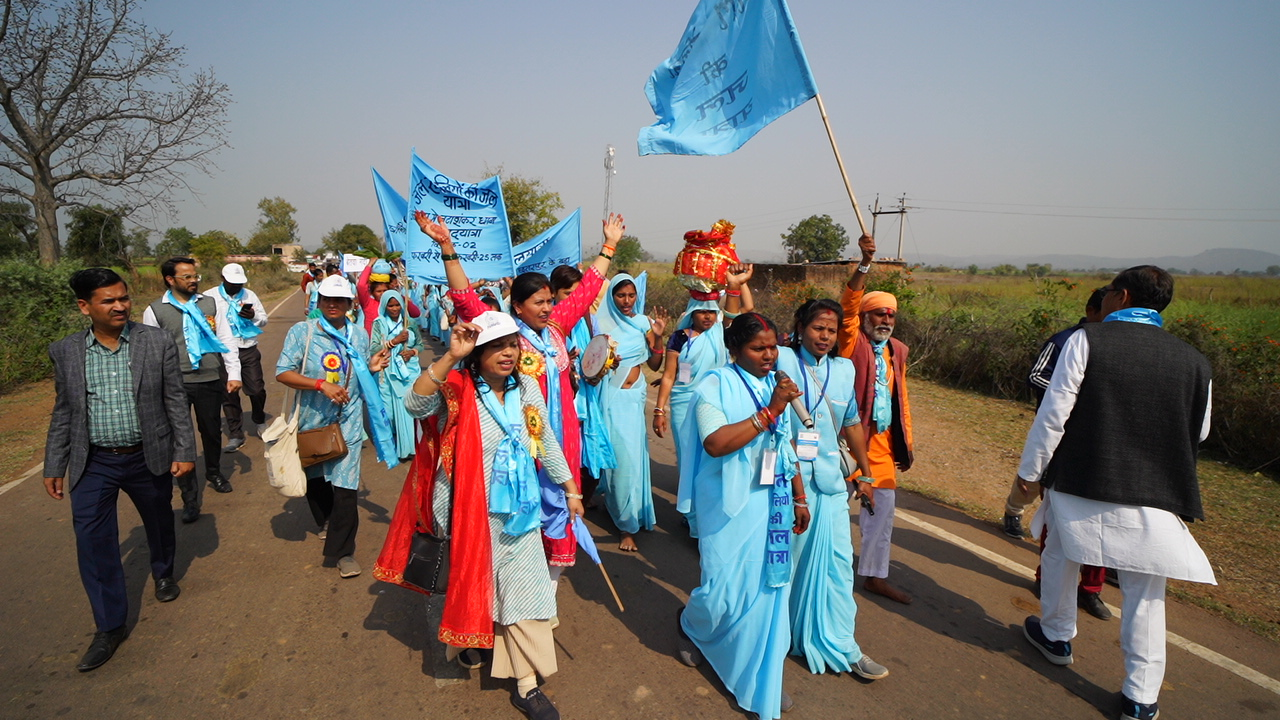
Enter the Jal Sahelis, grassroots women leaders who have been at the forefront of water conservation for over a decade. The Paramarth Samaj Sevi Sansthan, with nearly three decades of experience in Bundelkhand, has spearheaded the Jal Saheli program since 2011. Over 3,000 rural women have emerged as “Jal Sahelis,” revitalizing hundreds of traditional water sources, building check dams, forming water panchayats, and transforming more than 100 villages into water-abundant communities. This model has earned recognition from the Jal Shakti Ministry, a presidential award, and praise from the Prime Minister in his “Mann Ki Baat” radio address.
Building on this foundation, the first Jal Yatra in February 2025 was a historic success. Starting from Okha and concluding at Jatashankar Dham in Madhya Pradesh, the 300-kilometer march traversed Niwari, Jhansi, Lalitpur, Tikamgarh, and Chhatarpur districts. Daily participation ranged from 400 to 1,000 Jal Sahelis and villagers, fostering direct dialogue with nearly 10 lakh people. Over 300 inactive ponds were identified, and several were revived through community-government collaboration.
Now, the 2026 Yamuna Yatra elevates this effort, focusing on river rejuvenation and climate resilience under women’s leadership. As the Ganga’s most vital tributary, the Yamuna demands an initiative that transcends policy to engage society deeply. The yatra will bridge the river and communities, linking culture, traditions, and modern generations with climate sensitivities.
Key objectives include raising public awareness about the Yamuna’s ecological state, pollution sources, and climate impacts; reconnecting youth with its historical, cultural, and spiritual significance; establishing dialogues on current challenges and community solutions; collecting suggestions, pledges, and climate-adaptive strategies for the river’s purity and flow; promoting chemical-free, river-friendly, and climate-resilient farming; strengthening women’s leadership in conservation; and empowering locals to document pollution hotspots, water harvesting potentials, and sensitive areas.
The yatra will commence at Pachnada—the sacred confluence of five rivers (Yamuna, Chambal, Sindh, Pahuj, and Kunwari)—in Jalaun district and culminate at Vasudev Ghat in Delhi. A core team of 100-200 will lead thousands of participants over 30 days, covering 15-17 kilometers daily. Traversing Uttar Pradesh districts like Jalaun, Etawah, Agra, Mathura, and Vrindavan before reaching Delhi, it promises to be one of the largest women-led river marches in India.
ctivities will blend action and engagement: river chaupals, community dialogues, and voluntary labor; discussions on water conservation, pollution prevention, and climate adaptation with schools, colleges, youth, farmers, and community-based organizations (CBOs); participatory mapping of polluted drains, dilapidated structures, tributaries, encroached wetlands, and climate vulnerabilities; cultural events like bhajans and folk songs to disseminate traditional water knowledge; formation of Yamuna Valley committees and water panchayats to boost women’s participation; structured consultations with officials, municipal bodies, industries, and representatives; and sharing action-oriented documents with bodies like the National Mission for Clean Ganga (NMCG), Central Pollution Control Board (CPCB), state departments, ministries, and local administrations.
This initiative will bolster national programs like Namami Gange, Yamuna Action Plan, Jal Jeevan Mission, and Amrit Sarovar by infusing social, behavioral, and climate dimensions.
Anticipated outcomes are transformative: direct engagement with over 5 lakh people along the route; heightened public participation, responsibility, and democratic involvement in river conservation and water management; identification and revival of ponds, wetlands, and tributaries for groundwater recharge and biodiversity; wider adoption of eco-friendly agriculture and climate-resilient practices; establishment of new community groups in over 200 villages; a comprehensive report by Jal Sahelis on ground realities, including climate effects, submitted to authorities; culmination in Delhi with a “Yamuna Rejuvenation Manifesto” incorporating resilience pledges; and amplified recognition for Jal Sahelis, inspiring similar models for other tributaries.
At the movement’s core are the women themselves. Jal Sahelis, who manage water daily, feel the river’s pain, and carry traditional wisdom, embody its spirit. This yatra shifts from government-centric to people-based rejuvenation—a decisive step forward.
As India grapples with environmental degradation, the Yamuna Yatra stands as a beacon of hope. It reminds us that true change flows from the grassroots, led by those most connected to the land and water. With climate threats looming, this women’s-led crusade could spark a nationwide ripple for sustainable rivers.