 Jubilee Post News & Views
 Dr. Utkarsh Sinha
The rising power of Jamaat-e-Islami in Bangladesh and the series of violence against Hindus have brought India-Bangladesh relations to a delicate turning point. The communal-tinged coverage by Indian TV media is deepening this tension, which is proving damaging on the diplomatic front. In this context, with lack of dialogue and mutual distrust between the two sides, it is essential to search for ways to improve relations.
Jamaat’s Emerging Power
The growing strength of Jamaat-e-Islami in Bangladesh is the result of the political vacuum following the fall of Sheikh Hasina’s government and various socio-economic factors. After Sheikh Hasina’s government collapsed in Bangladesh, Jamaat-e-Islami rapidly gained political ground.
In the changes that began in August 2024, the interim government lifted the ban on Jamaat, allowing the party to form alliances with groups like the National Citizens Party (NCP) and the Liberal Democratic Party (LDP).
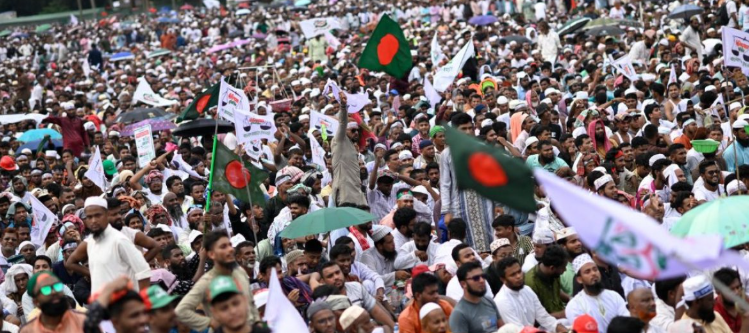
Ahead of the February 2026 parliamentary elections, Jamaat has prepared a coalition of 10 parties, including groups linked to the student movement, which demonstrates its increasing influence. Alleged support from Pakistan’s ISI and contacts by ambassadors from countries like China and Turkey with Jamaat leaders have also strengthened it on the international stage.
All this is happening despite Jamaat’s history of supporting Pakistan during the 1971 Liberation War, posing a threat to Bangladesh’s democratic structure.
Why Is Jamaat’s Power Increasing?
In recent years, the number of Qawmi madrasas has increased; these are outside state control and spread religious extremism. Secularism has been removed from the curriculum, and Islamic narratives have been propagated through social media. Alliances with Hifazat-e-Islam have expanded its base among youth and women.
Additionally, Jamaat controls Islami Bank and 14 other rural banks, creating economic influence. Its network of social institutions is strong in rural areas.
The Series of Violence Against Minorities
In recent months, incidents of violence against the Hindu community in Bangladesh have increased, which is alarming. Between December 2025 and January 2026, four Hindu men were murdered, including one who was beaten to death by a mob on blasphemy charges and his body burned. Reports emerged of arson on Hindu homes in Chittagong (Chatgaon’s English equivalent) and Pirojpur, while the government acknowledged 88 incidents of violence.
These attacks appear inspired by religious fundamentalism, though some are linked to political revenge. The Hindu-Buddhist-Christian Unity Council has confirmed attacks across the country, creating an atmosphere of fear among minorities. The government has made arrests, but these incidents are heightening tension ahead of the elections.
Media’s Communal Presentation
Indian TV media has presented these events with a communal color, which has been exaggerated and misleading. Channels like India TV and Times Now ran stories with headlines like “Jihad Against Hindus,” even though many videos showed attacks on Muslim homes. Aligarh media described it as a “Hindu Genocide in Bangladesh,” which was far from the facts.
According to Bangladeshi sources, most attacks were political against Hasina supporters who are Hindus, not religious. Nevertheless, Indian media turned it communal, benefiting the BJP’s domestic politics. This has fueled anti-India sentiment in Bangladesh, where the interim government accused Indian media of “misinformation.”
Assessment of Diplomatic Damage
This coverage by Indian TV is severely affecting diplomacy. Bangladesh criticized Indian media, accusing it of “double standards” and rejecting India’s statements on minority protection. This has increased mistrust in bilateral relations — for example, the Bangladesh Cricket Board refused to travel to India for the 2026 T20 World Cup.
Tension already existed before granting shelter to Sheikh Hasina in India; now the media has added fuel to it. The Bangladeshi Foreign Ministry linked attacks on the Indian embassy to media propaganda. As a result, issues like border disputes, water sharing, and trade have stalled. This is benefiting Pakistan and China, who are supporting Jamaat.
Cooperation or Mutual Benefit?
There may be no evidence of direct collusion between Jamaat and Indian media, but indirectly, both sides are benefiting. Indian media’s exaggerated coverage provides Jamaat with an anti-India card, helping it gather votes in elections.
Meanwhile, Indian channels create a “Hindu in Danger” narrative for domestic audiences to boost TRPs and prevent the scattering of supporters of India’s ruling party.
Bangladeshi press has called it a “Media Misinformation Nexus,” which is breaking relations. This strategy of both sides is harming Bangladesh’s stability and India’s neighborhood policy. In reality, it is a dangerous cycle where the media is indirectly promoting Jamaat’s ideology.