 Jubilee Post News & Views
Jubilee News Desk
On Monday, a major terrorist attack occurred in Balochistan, Pakistan, highlighting the region’s ongoing security challenges. The attack took place in the Nokundi area, where a suicide bomber detonated explosives at the main gate of the Frontier Corps (FC) headquarters. Following the blast, six armed militants attempted to storm the facility. Pakistani security forces responded swiftly, killing three of the attackers while ongoing operations are continuing to neutralize the remaining assailants.
The Balochistan Liberation Front (BLF), a separatist insurgent group, reportedly claimed responsibility for the assault, stating that their fighters targeted the FC office and engaged in a prolonged gunbattle with troops. The suicide vehicle-borne improvised explosive device (SVBIED) caused significant damage to the main gate and surrounding structures, and the attack led to the deaths of six security personnel.
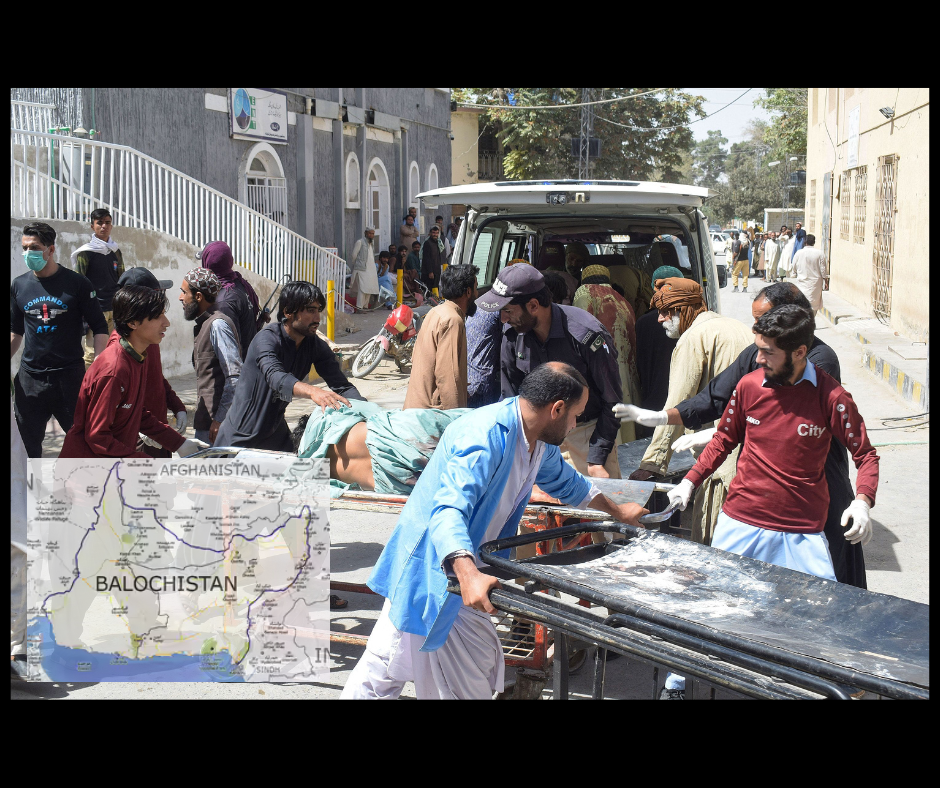
This incident is part of a recent surge in violence across Balochistan. Over the past 24 hours alone, seven explosions rattled the province, targeting cities like Quetta and Dera Murad Jamali. Although no casualties have been reported in these blasts, several security personnel and construction workers were injured. Insurgents have also conducted grenade attacks on police checkpoints and disrupted railway services by detonating improvised explosive devices on the tracks.
The ongoing insurgency in Balochistan has led to frequent clashes between militants and security forces, with hundreds of lives lost in 2025 alone. The attacks reflect deep-rooted ethnic, political, and economic grievances in the province, exacerbating instability. Pakistani authorities have condemned the attacks and intensified security measures, including deploying helicopters for rapid response and conducting extensive search operations for militants.
Prime Minister Shehbaz Sharif condemned the attacks in strong terms, pledging to continue the fight against terrorism and restore peace in the troubled province. However, the persistent violence underscores the complex security and political challenges Pakistan faces in Balochistan, where demands for autonomy and control over resources fuel the conflict.
The attack today once again exposes the fragile security situation in Balochistan, where militant activity disrupts everyday life and hampers development. While the security forces’ prompt response prevented further casualties, a lasting solution to the violence requires political dialogue, inclusive governance, and socioeconomic reforms. Without addressing the underlying causes of unrest, such incidents are likely to continue threatening peace and stability in the region.