 Jubilee Post News & Views
 Dr. Utkarsh Sinha
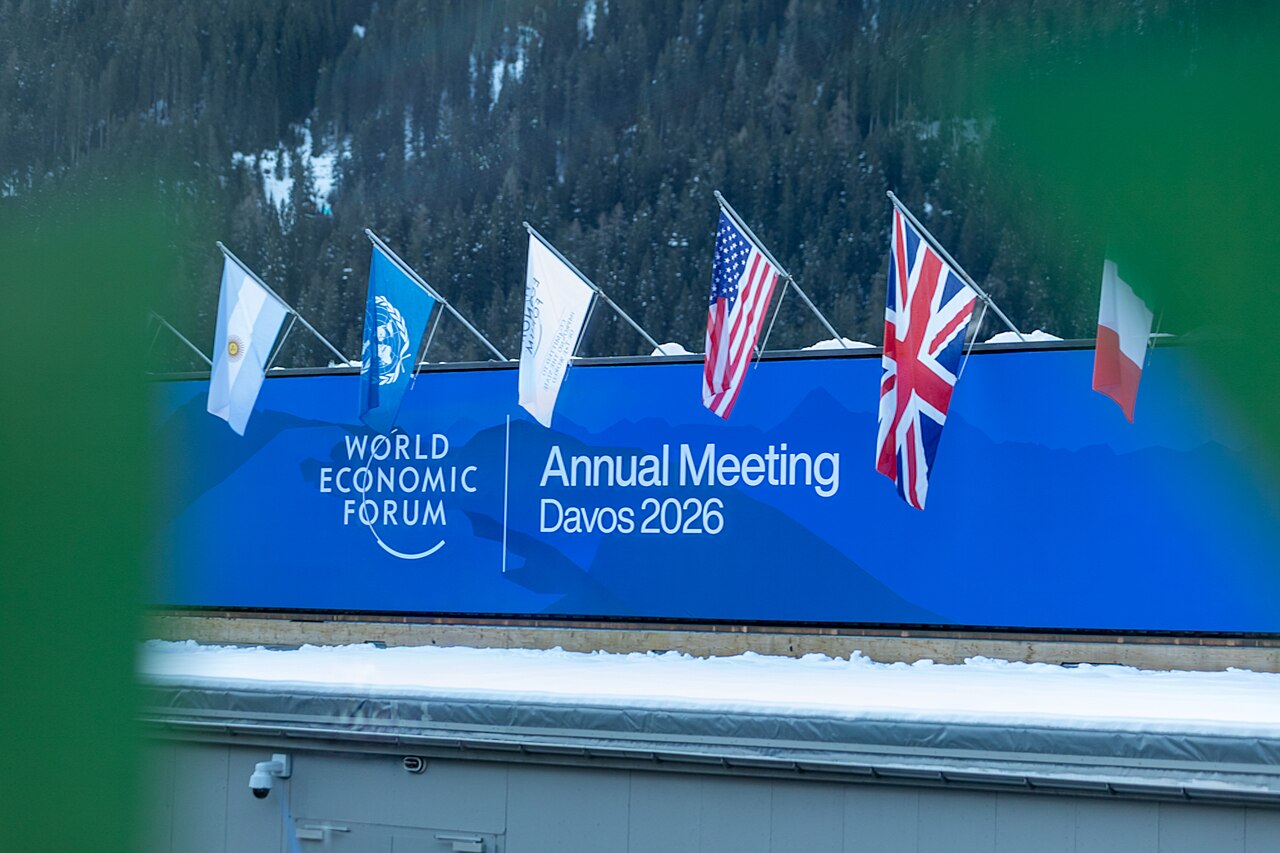
The year 2026 marks the decisive phase of global power reconfiguration, where the final chapter of American unipolar dominance is not just being written but explicitly declared on international stages. At the World Economic Forum in Davos, Canadian Prime Minister Mark Carney’s direct challenge to America illuminated this shift, declaring the old global order in a phase of profound rupture and stating unequivocally that the U.S.-led system will never return, rendered irrelevant by successive financial crises, post-COVID instability, and layered geopolitical tensions.
The Trump administration’s aggressive “America First” policy has fueled massive import tariff wars, created strategic distance from alliances like NATO, and prioritized bilateral deals, inflicting historic damage on multilateral institutions such as the United Nations, World Trade Organization, and International Monetary Fund. The prolonged Ukraine-Russia conflict, ongoing Gaza-Iran tensions in the Middle East, escalating Taiwan disputes in the Asia-Pacific, and crises in Latin America like Venezuela have fundamentally fragmented global supply chains, prompting both developed and developing nations to pivot rapidly toward economic self-reliance, regional alliances, and alternative trade blocs.
Against this crisis-laden global backdrop, a new world order is taking shape as multipolar, though its core structure reveals clear bipolar traits—primarily the central U.S.-China rivalry. The American pole has narrowed mainly to an Indo-Pacific focus, encompassing key partners like Japan, Australia, South Korea, and Quad nations, where military superiority, high-tech sanctions, and AI-driven weaponry serve as primary strategic tools. Conversely, the Chinese pole is accelerating economic expansion in the Global South via the expansive Belt and Road Initiative network, institutionalizing BRICS strength while rapidly extending influence across Africa, Latin America, and Central Asia, while disrupting global military balance through hypersonic missile technology and cyber warfare capabilities.
The European Union is striving to emerge as an independent third pole, with Germany and France fully focused on minimizing energy dependence on Russia, accelerating green energy transitions, and developing indigenous defense industries—yet post-Brexit internal political divisions and persistent economic slowdown remain its greatest strategic vulnerability. The most intriguing and unforeseen development is the rise of the Eurasian pole, centered on the Russia-India-China triad; Trump’s bullying economic policies have unwittingly united them unprecedentedly, positioning India—through its balanced diplomatic strategy—to firmly advance toward becoming a third autonomous pole.
These emerging new poles are driving comprehensive and enduring reconfiguration across economic, military, technological, and environmental domains. Economically, de-globalization has peaked, with regional trade blocs like RCEP, the African Continental Free Trade Area, and the Eurasian Economic Union rapidly institutionalizing, while U.S. tariffs and Chinese restrictions have dragged global growth rates down by 2-3 percentage points. Militarily, a triangular arms race has intensified dramatically—America is developing the extraordinary capacity to fight two nuclear wars simultaneously, China is investing massively in hypersonic systems and vast carrier fleets, and Russia is maintaining its geopolitical stance unyieldingly through energy weapons and nuclear saber-rattling.
Artificial intelligence has become geopolitics’ most revolutionary new dimension, with U.S.-China competition spawning cyber warfare, autonomous drone strikes, and deep fake propaganda techniques that will permanently alter all known rules of conventional conflict. Climate change poses the gravest existential challenge to the global order—America’s retreat has enabled China to seize global leadership in green technology, solar energy, and electric vehicles, but developing nations like India, Brazil, and South Africa suffer most from floods, droughts, and climate migration crises.
For India, this global transformation presents a unique blend of opportunities and risks. If India could emerged as a leader of the Global South, India can play a pivotal bridging role between the U.S.-China-Russia triangle, scaling its economy to $5 trillion through active engagement in both Quad and BRICS, strategically leveraging Russian oil imports, American semiconductor tech, and Chinese infrastructure investments.
However, grave risks persist, including the Ladakh border dispute, South China Sea tensions, and U.S. trade wars, necessitating India to double defense spending, boost indigenous arms production, and ensure complete digital sovereignty.
In the long term, this new world order will prove more balanced yet inherently unstable, with regional powers playing decisive roles in global decision-making, while great-power clashes could indirectly crush smaller and medium nations.
All old international rules have fully shattered; new ones are forming—2026 is truly the golden year of global realignment, laying the unshakeable foundation for a multipolar world, provided astute diplomacy, economic resilience, and technological autonomy remain intact.