 Jubilee Post News & Views
 Dr. Utkarsh Sinha
Concerns about foreign intervention in Nepal’s politics, particularly American influence, have persisted for a long time. In recent years, these anxieties have reached new heights, especially following the Generation Z (Gen Z)-led protests in 2025. Accusations surfaced that the protesters received American support, including funding and training through organizations such as the U.S. National Endowment for Democracy (NED) and the International Republican Institute (IRI). Investigative journalism platforms like The Grayzone have cited leaked documents claiming that the United States spent millions of dollars to organize young Nepali activists, ostensibly to counter the growing influence of China and India.
These allegations have raised serious questions about Nepal’s sovereignty, as the protests ultimately toppled Prime Minister K.P. Sharma Oli’s government and paved the way for the March 2026 elections. The roots of claims regarding American intervention in the Gen Z protests run deep. The demonstrations, which began in September 2025 against social media restrictions, corruption, and nepotism, quickly turned violent, resulting in 76 deaths and thousands injured. While the protesters succeeded in ousting the government, subsequent reports suggested the movement was not entirely “spontaneous.” Leaked documents revealed that the NED allocated $350,000 under its “Youth Leadership: Transparent Policy” program in 2021–2022, covering protest organization, digital mobilization, and leadership training.
The Grayzone described this as a means to advance U.S. interests, particularly within its Indo-Pacific strategy, by positioning Nepal as a counterweight to China. Nepal, situated as a buffer zone between India and China, has seen U.S. interest manifested through projects like the Millennium Challenge Corporation (MCC), which many Nepalis view as part of an American military alliance. Such claims have branded Gen Z leaders as “American puppets,” undermining their credibility. Post-protest parties, such as the Rastriya Swatantra Party (RSP), now rely heavily on the youth vote bank in the upcoming elections, but these accusations have forced them into a defensive position.
Now, similar allegations have extended to senior Nepali Congress leader Gagan Thapa, previously limited to Gen Z figures. Thapa, who rose through student movements and faced multiple arrests, has long been regarded as a reformist leader. However, amid recent internal party disputes, he has been portrayed as a victim of “foreign influence.” Leaders like Mohan Bahadur Basnet accused Thapa of interfering with the Commission for the Investigation of Abuse of Authority (CIAA), with some reports linking this to American backing. Thapa’s historical record includes sedition charges in 2005 for anti-monarchy slogans, but current claims center on U.S. connections. Some analysts argue that Thapa’s reformist image and youth appeal make him aligned with American interests, especially as China’s influence grows in Nepal. The Nepali Congress, traditionally India-oriented, now appears increasingly reliant on American aid, positioning leaders like Thapa as potential faces of this shift. Although Thapa has rejected these accusations, they have become a potent political weapon in the pre-election period, potentially benefiting rivals such as the CPN-UML.
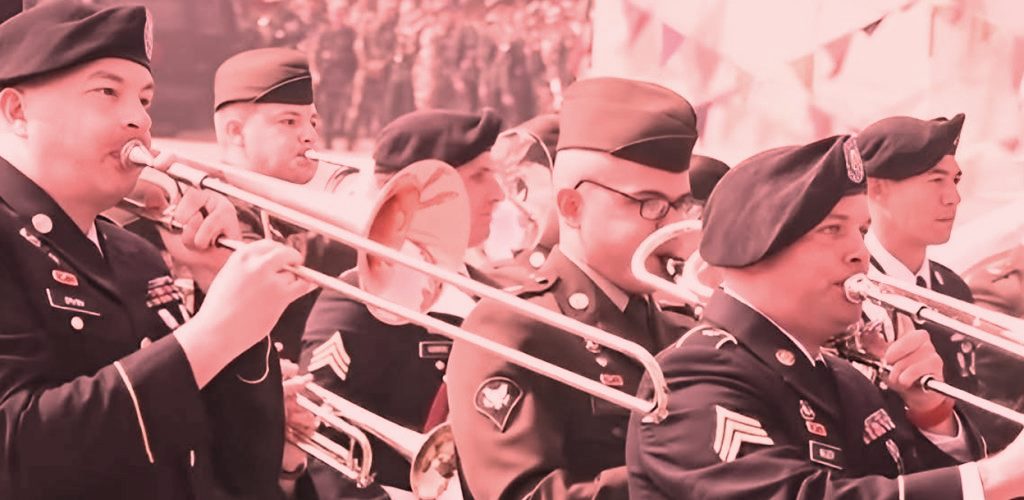
Just before the elections, on February 15, 2026—coinciding with Nepal Army Day and Mahashivaratri—an American military band participated in the event at Kathmandu’s Tundikhel, sparking major controversy. The program, marking the Nepali Army’s 263rd anniversary, included rifle salutes, military demonstrations, and cultural performances. The Nepali Army clarified that the involvement of bands from the United States, India, and the United Kingdom was a routine aspect of military diplomacy, aimed at strengthening army-to-army cooperation. However, viral photos and videos on social media portrayed it as an “American soldiers’ parade,” igniting public anger. Many interpreted it as the beginning of American intrusion, especially following a recent visit by a U.S. general. In a sovereign nation like Nepal, the presence of foreign troops remains a highly sensitive issue, and this event has amplified fears of American intervention in the electoral atmosphere.
Celebrities have played a vocal role in this controversy. Renowned folk singer Jyoti Magar expressed outrage on social media, describing the parade as an “attack on sovereignty” and highlighting it as a threat to Nepal’s culture and independence, which has resonated strongly among youth and rural communities. Other celebrities and influencers, including Barsha Shah who shared Army Day photos, have contributed to the discourse. Social media saw trends like #USOutOfNepal, with users connecting the event to the MCC and Gen Z protests. One post claimed the “American soldiers’ parade is a conspiracy to turn Nepal into Ukraine.” These statements reflect how concerns over American meddling have permeated public consciousness.
Analyzing these events, fears of American intervention appear exaggerated yet grounded in reality. Nepal’s geopolitical position makes it a playground for foreign powers. The United States invests in democracy and development in Nepal, but critics view it as a geopolitical strategy. This narrative is fueling nationalism in the country. In the elections, such issues could sway voters, with parties like the CPN-UML likely to capitalize on anti-American rhetoric.
In conclusion, anxieties over American interference in Nepal stem from legitimate concerns but are often amplified. From Gen Z leaders to Gagan Thapa, the accusations, combined with the Tundikhel parade controversy, underscore demands to protect sovereignty. Celebrity voices like Jyoti Magar’s amplify public debate. Nepal needs robust diplomacy and internal unity to address these fears, ensuring foreign influences do not sway the elections.
(Author is a senior journalist and expert of International politics)