 Jubilee Post News & Views
 Dr. Utkarsh Sinha
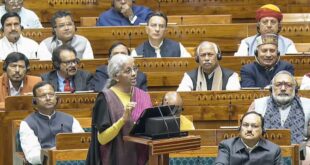
This is the same Parliament, the same democracy, but its character is rapidly changing into one where the ruling power fears questions and the opposition’s voice is becoming increasingly helpless. The House that the people created to voice their fears, dreams, and sorrows now feels more like a stage for television framing, headline management, and statistical jugglery, and less like a platform for accountability.
The ever-widening gap between the Prime Minister’s words about wanting “meaningful debate” and the ground reality has become the biggest indicator of today’s democracy — where selected issues receive applause, but real questions are left standing at the door.
The Parliament session has begun, and the Prime Minister himself has said that he wants meaningful debate. But the question now arises: if there is no discussion on the Pahalgam terrorist attack, the explosion near Red Fort Metro station, the Epstein case in America, the economy, the falling credibility of the rupee, runaway unemployment, the laws that are effectively turning workers into slaves, the intensive voter list revision programme, Delhi’s air reaching dangerously toxic levels, the investment of capital from public banks, Life Insurance Corporation, and other government financial institutions into Adani and Ambani’s ventures, or the looting and corruption of the country’s assets, wealth, and natural resources — then what exactly should the discussion be about?
The silence on a terrorist attack like Pahalgam is not merely a matter of security policy; it is also a test of democratic sensitivity. When the sound of gunfire echoes from a distant valley, that echo must be heard in the House, because it is the country’s highest panchayat, where the concerns of martyrs and the fear of ordinary citizens find words. If even the mention of such an attack cannot move beyond symbolic formality, the message is clear — national security has now become more an object of power display and rhetoric than of deep deliberation. The tendency to brand any dissenting voice on internal security as “anti-national” has further narrowed parliamentary debate.
Also Read : Pakistan: Power, Military Role, and Threat of Fragmentation
The blast near Delhi’s Red Fort Metro station is not just a question of Delhi’s security; it is a symbol of citizen insecurity right in the heart of the capital. This is the very city from which the country should receive assurance that the system is alert. Yet when even after such a serious explosion there is no long, open, and live debate in the House, people feel that their pain is nothing more than a few news clips. Detailed discussion on such incidents is essential so that the path to reform — from intelligence failures to disaster management, compensation, and long-term security policy — emerges from there. When such discussion is postponed, it becomes not just a convenience for the government, but a failure of democracy itself.
The absence of discussion on America’s Epstein case may seem superficially unnecessary, but in reality it is a mirror to global power structures, human trafficking, sexual exploitation, and the dark alliances of international capital. A mature Parliament debates foreign affairs too, so that it can understand changing global equations and power relations and thereby strengthen its own foreign policy and domestic laws. If there is uneasy silence even on such issues, it does not mean the problem does not exist; rather, it means that in the face of global capital and “friendly relations” politics, even the House is hesitant.
A crumbling economy, a falling rupee, runaway unemployment — these issues stand at the very root of the real crises facing citizens in this democracy. Inflation, stalled start-ups, the breaking backs of small traders, agricultural instability, and a generation wandering in search of jobs — reports on all these should be tabled in Parliament every single day. If the glittering lines of budget speeches and slogans of “Vishwaguru” do not collide with the empty wallets in the pockets of unemployed youth, then the moral foundation of democracy itself becomes hollow. Running away from economic discourse gives the government momentary relief, but fills society’s veins with restlessness and distrust.
The failure to debate labour laws that effectively turn workers into “cheap and obedient resources” is akin to an insult to Parliament’s own labouring character. The people whose brick-by-brick toil built this Parliament, these cities, these factories — their reality (overtime, temporary jobs, work without safety, contract systems) is made invisible precisely in the place where their rights should be protected. If Parliament cannot have serious debate on labour rights, trade-union autonomy, minimum wages, and social security, it becomes clear that at the centre of economic policy stands not the human being, but the mathematics of capital and production costs.
The lack of discussion on false or exaggerated FIRs against opposition leaders, misuse of agencies, and irregularities in voter lists is a direct attack on the very roots of democracy. When investigative agencies start looking like tools of political revenge and trust in the Election Commission’s procedural decisions begins to erode, Parliament should be the place where the ruling side is put in the dock to explain itself and consensus is reached on necessary reforms. If even there silence prevails or real questions are buried amid noise and chaos, the common voter receives the message that their participation in the power game has been limited merely to casting a vote.
Allegations of vote theft or rigging in the Bihar elections and the voter-list revision process are not ordinary complaints for democracy; they are warning bells. If even one serious allegation is left hanging in the air without examination, trust in the entire electoral system starts to waver. There should be special discussions and in-depth review by parliamentary committees on issues such as the voting process, EVMs, VVPAT, booth management, and the transparency of voter lists. This is Parliament’s job, not that of media debates; but when Parliament itself sidesteps this responsibility, the spread of distrust in democratic institutions becomes natural.
Delhi’s poisonous air is not merely an environmental issue; it is a public-health emergency. The poison dissolving into the lungs of every child, elder, and labourer who breathes is represented not just by the numbers on the Air Quality Index, but by a Parliament that sits silently while citizens’ lives are at stake. There should have been debate on what the long-term solution will be — combining industry, vehicles, construction, stubble burning, energy policy, and urban planning — and at what level whose accountability will be fixed. When discussion on pollution is also dismissed as “political drama,” it becomes a serious question mark on the health of democracy itself.
Accusations that public-sector banks, LIC, and other government financial institutions are putting public money at risk for corporate houses like Adani and Ambani may sound like “leftist slogans,” but at their core lies the hard-earned money of ordinary citizens. Public banks and insurance institutions stand on public trust; transparency and accountability in their investment decisions must be paramount. It is natural and necessary for Parliament to ask how much was invested in which project or company, how the risk was assessed, and who will compensate if there is a loss. When even raising this is declared “anti-development,” what is actually happening is that corporate interests are being freed from democratic oversight in the name of development.
Parliament’s silence on the rapid privatisation-style looting of the country’s assets and natural resources — minerals, forests, rivers, coasts — and the corruption linked to it is perhaps the most dangerous development of all. When local communities and ecological balance are sacrificed in policies of land acquisition, mining leases, deforestation, river-linking or diversion projects, the first question must arise: is the government acting as trustee of the people or as a contractor? If parliamentary committees, question hour, and special debates continue to avoid deep scrutiny of these decisions, then democracy will remain merely the name of an electoral process; its moral core and the soul of public interest will have been drained out of it.
Ultimately, the question is not what kind of Parliament this is, but in what direction we have allowed this Parliament to go. When dissent inside the House is treated as enmity, criticism as treason, and the demand for debate dismissed as “drama,” that is when the real crisis of democracy begins.