 Jubilee Post News & Views
Jubilee News Desk
With the 2026 West Bengal Assembly elections approaching, the deletion of 56 lakh names from the voter list has sparked intense political debate. While removing 23 lakh deceased voters appears natural, the remaining over 30 lakh ‘missing’ or ‘untraceable’ voters have heightened suspicions. The Election Commission’s ‘surgical strike’ could potentially disrupt the balance in 90 closely contested seats out of the state’s 294, where victory margins have historically been decided by just 15,000 votes.
Cleaning Up ‘Dead’ Voters: Necessary but Insufficient
Out of 56.37 lakh suspicious entries, identifying and removing 23 lakh deceased voters is a transparent step that enhances the credibility of the electoral process. This figure emerged from scrutinising 7.66 crore forms, indicating an average reduction of 19,000 voters per assembly seat. However, this alone does not resolve the issue, as the real questions revolve around the remaining names.
30 Lakh ‘Missing’: Shifted or Victims of Conspiracy?
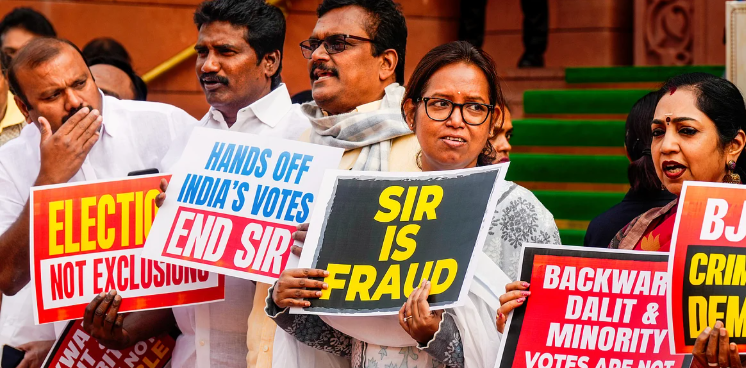
The remaining over 30 lakh voters are being categorised as ‘shifted’ (address changed) or ‘untraceable’ (not found during verification) and removed. Given West Bengal’s large population of migrant workers and those who change addresses, this number may seem plausible. Yet, the opposition alleges that Booth Level Officers (BLOs) are selectively targeting supporters of rival parties. This evokes memories of similar claims during the Bihar elections, where ‘missing’ voters were accused of harming core vote banks.
BJP vs TMC: Whose Vote Bank is Under Threat from the ‘Missing’ Voters?
The BJP argues that these ‘missing’ names belong to fake, infiltrator, or Rohingya voters who had become part of TMC’s vote bank, and their removal will lead to a cleaner list, benefiting the BJP. On the other hand, TMC supporters claim that voters with BJP leanings or those who migrated for employment and oppose the government are being deliberately marked ‘untraceable’, which would strengthen Mamata Banerjee. Overall, these 30 lakh ‘missing’ voters could create a 7.5% swing, potentially altering the equation on 90 seats where even a 2% shift can determine government formation.
The ‘Khela Hobe’ has now shifted from the polling booths to the voter list itself, with the true test of the people’s mandate hinging on a transparent investigation of these ‘missing’ names.
The deletion of 56 lakh names from the voter list ahead of the 2026 West Bengal Assembly elections has triggered a new political storm, as this figure represents approximately 7.5% of the total voters and could directly impact around 80-90 marginal seats. It is a clear sign that Bengal’s next battle has already begun on paper—in the voter list.
56 Lakh Names Deleted: Average 19,000 Per Seat
The Election Commission’s scrutiny of about 7.66 crore forms has identified 56.37 lakh voters as ‘uncollectible’ or suspicious, with the process of removal underway. Averaged across 294 assembly seats, this means roughly 19,000 voters per seat are being excluded—a number sufficient to overturn results anywhere.
Political calculations suggest that a 2% vote swing can change the government, making it difficult to dismiss a 7.5% reduction as mere technical cleanup. Especially in seats where the previous margin was 5-10,000 votes, a loss of 19,000 voters could render any sitting MLA’s position insecure.
90 Seats in the Danger Zone
Analysis of the 2021 results shows that victory margins on 80-90 seats in Bengal were less than 15,000 votes—these are known as marginal seats in political terms. With an average of 19,000 names being removed per seat during the list revision, conditions are ripe for results on these seats to be rewritten.
Experts assess that even a slight bias in the deleted voters towards one party could almost certainly flip the seat. Thus, the 2026 election appears more dependent on the composition of the voter list than on the booths themselves.